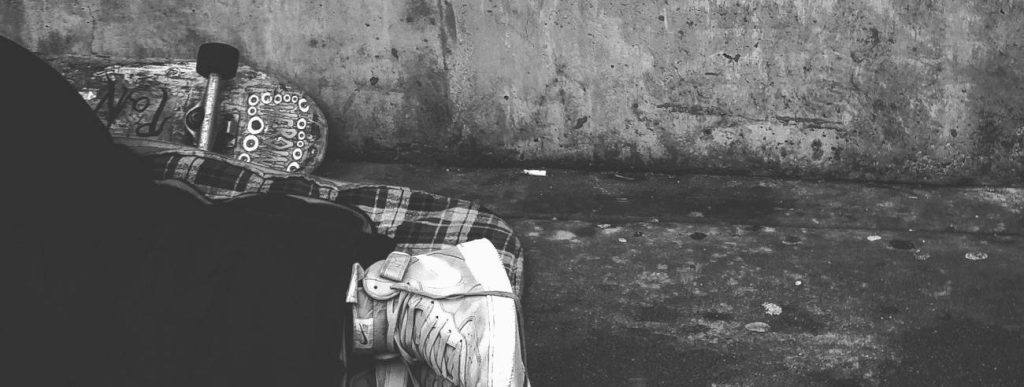
In Northern Ontario, poverty no longer can hide. It freezes where everyone can see it.
It lies curled beneath overpasses and pressed into doorways. It shivers at bus stops long after transit stops running. It becomes hypothermia, untreated illness, addiction left untreated not because its uncurable, but because it’s politically and optically inconvenient. And far too many times, it becomes a body found in a snowbank, quietly removed before morning traffic resumes.
A human life gone, swept away to be a statistic.
This is not a failure of weather.
It is a failure of governance.
Not tragedy by accident. In Ontario, it is policy by neglect.
The Northern Reality: An Extraction Colony in All But Name
Governments at every level speak proudly of what the North provides to the rest of the country, while showing little interest in what it truly needs to survive with dignity. Timber. Minerals. Energy. Labour. All extracted and exported. Wealth flow south. Decision-making flows south. Responsibility flows nowhere at all. It feels like accountability evaporates somewhere along the highway.
Municipal governments plead poverty. Provincial governments gesture at underfunded pilot programs. Federal governments commission studies that take months to provide an under-read report. Meanwhile, people freeze. This is what an extraction colony looks like in a modern democracy: the land is valuable, the people are expendable.
Our Failure is Total and Shared
At the municipal level, Ontario is trapped in cycles of infighting, deflection, and paralysis.
Councils argue incessantly over jurisdiction, budgets, and optics while encampments grow and shelters overflow or close. Solutions are delayed by political grudges, fear of backlash, and endless debate over “process”. The question is never how quickly can we act? It is only who will take the blame?
Canadians experiencing homelessness are reduced to line items and talking points, shuffled between committees while winter closes in. In the time it takes to pass a motion, another life is placed at risk. Municipal government claims it lacks the tools. But it never lacks a will to police, displace, or fine.
Provincially, our government governs Northern Ontario with horse blinders firmly in place.
It sees economic output, but not human cost. Budgets, not bodies.
Housing remains underfunded. Mental health and addiction services are fragmented, inaccessible, or non-existent. Municipalities are handed responsibilities without resources and then blamed for failing to perform miracles.
This province speaks endlessly about efficiency while allowing the suffering to metastasize. It treats poverty as an unfortunate side effect rather than a systematic crisis that demands intervention. Looking away does not make our problems disappear, it only makes the deaths quieter.
Federally, Northern Ontario may as well be invisible.
Ottawa loves to speak about markets, investment confidence, and national growth while citizens freeze to death in Northern Ontario. Corporate profits are protected with sacramental urgency. Human lives are addressed with press releases after the fact.
Housing is discussed as an economic lever, not a moral imperative. Poverty is managed rhetorically, never eradicated materially. The rising body count is treated as regrettable background noise in a system too busy to minding its profit margins to intervene.
There is always money and movement when capital demands it.
There is always delay when the people do.
The Dehumanization of Poverty
What enables all of this is a broader, more insidious cruelty: apathy.
Poverty is framed as a nuisance rather than a failure of policy. The unhoused are seen as threats to comforts, not lives in danger. Proposed shelters are opposed. Affordable housing is stalled. Solutions are rejected because they might be nearby. NIMBYism in Ontario wears polite language, but its consequences are lethal.
Every time a project is delayed to preserve “neighbourhood character”, the cold bites harder. Every time compassion for the suffering is postponed for convenience, the snow deepens.
Apathy as a Political Choice
We are told there is no money. No jurisdiction. No simple fix.
Yet there is always money for extraction infrastructure. Always jurisdiction when it comes down to vindictive policing policies. Always urgency when profit, property and capital is threatened. What is missing is not capacity, but will.
Poverty persists in Northern Ontario because too many people have decided it is acceptable or acceptable to look away. Because its victims are the poor, the Indigenous, the disabled, the addicted. They are simply invisible enough to be ignored, to be reduced to a statistic that exists in crawling byline on the morning news. Because bodies are easier to mourn abstractly than to prevent proactively and concretely.
This is an Moral Indictment
A society that allows people to freeze to death while infighting over zoning laws is not merely inefficient, it is morally bankrupt.
Northern Ontario does not not need more sympathy. It needs housing. It needs income supports that reflect our cost of living. It needs accessible healthcare and sustainable mental health services. It needs governments that treat survival as a right, not a privilege contingent on market value or public comfort.
And it needs a population willing to confront an uncomfortable truth:
If we continue to tolerate this, we are complicit in it.
Bodies in snowbanks are not inevitable. They are the visible outcomes of our choices made and unmade at city halls, at Queen’s Park, and in Ottawa; repeated, defended and ignored. Until those decisions change, winter will continue to do what our governments refuse to stop
Until we stand and choose differently, the snow will keep covering the evidence of our collective sins.
-K-
 THE GROUNDBREAKER
Leave a comment