There are moments in history when the world feels heavy. When injustices seem too large to tackle, when power is too entrenched, and change seems impossibly far away. In those moments, hope can feel naive; but history shows time and time again that it is precisely the smallest sparks of hope, held onto by ordinary people, that can ignite movements far beyond their original reach.
One of the most striking examples in modern history comes not from the grand halls of power, but from the most unlikeliest of all places.
The produce section of a Dublin department store.
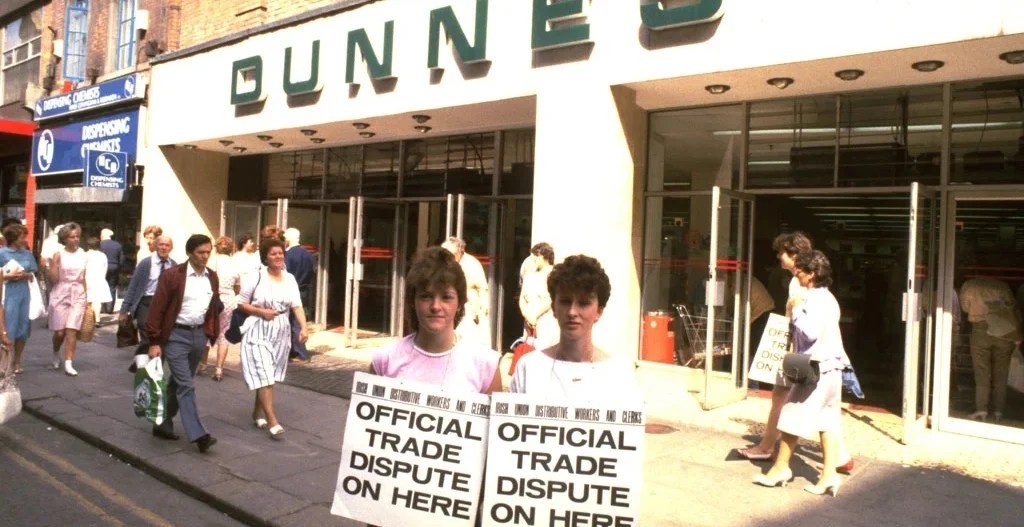
In July 1984, a 21-year-old shop worker named Mary Manning was working the tills at the Dunnes Stores in Dublin, Ireland. A South African grapefruit slid across her conveyor belt. She remembered her union’s call to support the international boycott against apartheid in South Africa; the brutal system of institutionalized racial segregation and discrimination enforced by the white minority government in South Africa.
Quietly but firmly, she refused to ring it through.
Management suspended her. In solidarity, ten other young shop workers joined her on strike, standing just outside the store for what would become nearly three years. They faced harassment, financial hardship, and social isolation. Many wondered why fight for an country so far away for a cause that didn’t even affect Ireland?
For a long time, it seemed their protest was a mere footnote.
But something remarkable happened. A middle-aged man joined them on the picket line and introduced himself as Nimrod Sejake, a South African trade unionist living in exile in Ireland. A teacher and organizer, Sejake had been part of the same resistance networks as Nelson Mandela. He visited the strikers on the picket line, shared stories of life under apartheid, and offered political education that connected Mary Manning’s simple refusal of a grapefruit to the broader struggle against racial oppression. His presence transformed their small act of defiance into a conscious act of global solidarity, reminding them – and the world – that even the smallest spark has the ability to travel far.
Their courage quickly drew international attention when they were met by Archibishop Desmond Tutu on his way to accepting his Nobel Peace Prize in Oslo; the actions of just 11 Irish women inspired Irish unions, politicians, and eventually the Irish government to ban South African goods until the system of apartheid was destroyed – the first Western country to do so.
What began as one woman refusing to handle a grapefruit became a key moment in the global anti-apartheid movement.
The Dunnes Stores strikers didn’t hold onto hope because they thought they’d win easily. In fact, they spent years in the cold, doubting they’d make any difference. But their hope wasn’t blind optimism – it was a decision to act as if change were possible, even when the odds were against them. This kind of hope is dangerous to oppressive systems because it spreads. One person’s small stand gives another permission to imagine that they, too, can resist. A refusal to ring up a grapefruit becomes a refusal to accept apartheid, and eventually, an entire nation takes a stand.
Today in our own country, even here in Northern Ontario – it can feel like the forces of austerity, and the climate crisis are too big to fight. Governments routinely ignore rural communities, corporations devastate the land, and the gap between rich and poor grows ever wider. In times like these, remembering stories like the Dunnes Store strike matter. Movements are rarely born fully formed; they start with people making small, hopeful choices that ripple outward.
The nurse blowing the whistle on underfunded hospitals. An Elder reviving language classes in a community hall. A neighbour organizing a rent freeze campaign in their building. A worker stepping up to talk about unionizing their workplace.
These are the sparks that, over time, build the fires of change.
Hope doesn’t mean pretending everything is fine. It means refusing to surrender, even when the night seems long. History belongs not to those who waited from perfect conditions, but to those who acted with courage in imperfect ones.
The Irish shop workers couldn’t see the end of apartheid when they stepped out on strike in 1984. But their single act of hope helped bring that end closer.
We can do the same here. In Northern Ontario, across Canada, and around this world of ours – small acts of hope, multiplied, can shift the course of history.
Hold onto your spark. You’ll never know what it might light.
-K-
 THE GROUNDBREAKER
Leave a comment