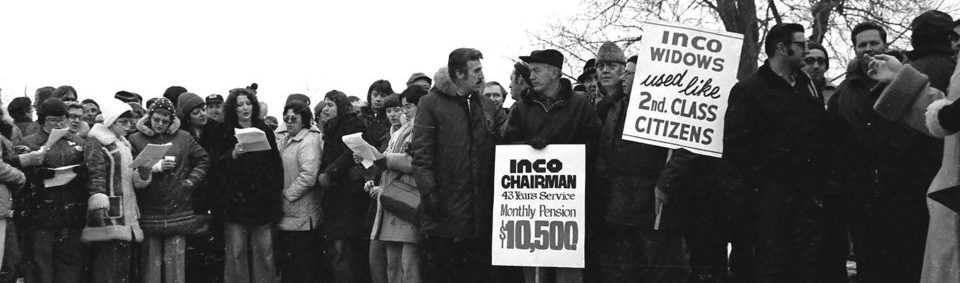
Northern Ontario has never been just a quiet land of rocks, trees, and harsh winters. It is a land forged in struggle, where miners, loggers, and Indigenous nations stood their ground against powerful forces that tried to exploit or erase them. Too often, outsiders stereotype the North as quietly conservative or forgotten, but its true story is one of radical resistance and working-class pride.
This is the story of Northern Ontario’s radical roots, told not just through politics, but through the everyday lives and struggles of her people.
In the mid-20th century, Sudbury was the one of the most important mining hubs in the world. The nickle that came from its ground armed Allied forces in the Second World War and fuelled Canada’s economy. But the miners themselves lived in dangerous conditions, with poor pay, little respect, and a daily risk of death working underground.
In 1978, the United Steelworkers went on strike in one of the longest and most bitter strikes in Canadian history. For nine months, 11,600 workers walked the picket line in the freezing cold, their families relying on food banks, church suppers, and community solidarity. It wasn’t just about money, it became a fight for dignity, safety and control over their own lives. The strike transformed Sudbury into a symbol of working-class militancy, proving that the ordinary worker can hold their own against one of the most powerful corporations in the world, Inco.
That strike still echoes in Northern Ontario’s culture. It lives on in the memory of those still-living today who braved the picket lines in the cold and in the pride of families who remember their parents and grandparents standing tall against injustice.
And long before the mines and mills, Northern Ontario was and remains Indigenous land. Indigenous peoples in Canada fought against colonization not only through resistance, but also through persistence of language, culture and governance.
An important story to remember comes from Grassy Narrows First Nation. For decades, mercury caused by local mills poured into the Wabigoon River; poisoning fish, animals, and people – the river ran sour and killed those that relied on it’s flow. The community fought tirelessly for justice, facing indifference from governments and corporations. Blockades in the 2000s, lead by Indigenous youth and Elders alike, forced the issue into the national spotlight. That struggle continues today, as Grassy Narrows residents fight for compensation, clean water, and control over their land.
This is not just a local issue, it’s a part of a broader Northern tradition of Indigenous resistance. From resisting pipelines and clearcuts to revitalizing languages and ceremonies, the Indigenous peoples of the North are leaders in the fight for justice and sustainability. Their struggle is a reminder that radical roots run far deeper than the arrival of settlers or unions in Ontario.
The very culture of Northern Ontario is steeped in resilience and defiance. Songs sung in the old mining halls, union banquets, curling rinks, and community potlucks have always carried more than nostalgia, they carry a sense of survival and solidarity in a land often forgotten. From mining songs to folk singers who told stories of strikes and hard winters, music has been a way to bind communities together. Beer leagues and local hockey clubs weren’t just recreation, they were places where workers built solidarity off the job. Meanwhile, bannock, moose stews, and Ukrainian perogies remind us of the North’s cultural mix, created by Indigenous peoples, settlers, and immigrant workers alike.
These everyday practices form a culture that is not conservative by nature, but radical in its insistence on community, survival, and pride in working-class life.
In 2025, Northern Ontario faces many of the same challenges it always has: corporate greed, governmental neglect, and environmental crises. But the radical roots of the North reminds us that these struggle are not new, and solving them is not an insurmountable impossibility – that there is tradition in resistance to draw upon. Today’s worker can learn from past strikes in Sudbury. Environmentally mindful youth can build alliances with Indigneous land defenders. Communities facing healthcare, education, and housing crises can look towards to traditions of co-operatives, union solidarity, and grassroots mutual aid organizing that kept countless small towns alive through harder times.
The North has never been passive or apolitical; it has always been a place where ordinary people demanded justice. That history – our radical roots – is worth remembering, celebrating, and carrying forward. When we speak of the North, we shouldn’t just talk about rocks, trees, and cold winters. We should speak the truth of miners who brought down multinational corporations, Indigenous nations who fought for their land and water, and working-class communities who turned hardship into solidarity.
These are the radical roots of Northern Ontario. They’re not just history – they’re a living inheritance, waiting to be carried forward.
-K-
 THE GROUNDBREAKER
Leave a comment